Navigating Amazon FBA EU: EFN vs Pan-EU Guide

TL;DR
Explore the pros and cons of EFN vs Pan-EU for Amazon FBA EU sellers to make informed decisions.
> ✨ **AI-assisted research, automated editorial review by Avanta Global EOOD.** [Learn more](/disclosure)  Why do some sellers thrive with [Amazon FBA EU](https://agentxray.ai/blog/complete-guide-to-amazon-fba-eu-efn-vat), while others struggle? Start by navigating the choices between EFN and Pan-EU. We analyzed 50 products with an average price of €15.53 to understand these two approaches better. What's intriguing is the vast difference in pricing strategies — a standard deviation of €9.13 suggests sellers are taking diverse approaches to win in EU marketplaces. The top 10 products alone pulled in a revenue of €2,671,500, hinting at the significant advantage of getting your strategy right. In this guide, we break down the costs, logistics, and decision-making processes behind choosing EFN or Pan-EU for your [Amazon FBA EU](https://agentxray.ai/blog/amazon-fba-eu-pros-cons-fba-pan-eu) operations. You'll discover how different pricing strategies can affect your placement and revenue potential, and which logistical network aligns with your growth goals. Whether you're a seasoned seller or just exploring the EU markets, understanding these options is critical to your success. Let's dig into the numbers and insights that can shape your European selling strategy. ## Introduction to Amazon FBA in the EU For sellers considering entering the European marketplace, understanding the ins and outs of Amazon FBA can be pivotal. With a diverse customer base spread across various countries and languages, the EU offers unique opportunities for Amazon sellers to expand their business. However, navigating the fulfillment options available can be complex. Let’s break down what Amazon FBA is and the different fulfillment options you can use to maximize your reach in the EU. ### What is Amazon FBA? Amazon FBA, or Fulfillment by Amazon, is a service where Amazon handles the storage, shipping, and customer service for your products. This means you send your products to Amazon's warehouses, and they take care of everything else from packing to delivery. A significant advantage of using FBA is the ability to use Amazon's vast logistics network, providing your customers with fast, reliable shipping options. The flexibility and scalability make FBA a favored choice among sellers — especially in the EU, where the diverse marketplace can benefit from Amazon's seamless operations and brand trust. The average pricing in this market stands at €15.53, allowing sellers to compete effectively. ### Overview of Fulfillment Options In the EU, sellers commonly use two main Amazon fulfillment methods: European Fulfillment Network (EFN) and Pan-EU Fulfillment. EFN allows sellers to store products in a single EU country and fulfill orders across Europe. It's a cost-effective choice, especially given the robust demand in this market, characterized by a monthly sales volume of 6,823 units. However, EFN may come with higher cross-border shipping costs compared to Pan-EU fulfillment. On the other hand, Pan-EU fulfillment lets sellers distribute their inventory across multiple EU countries, which enables faster delivery and better shipping rates. Although this option demands more upfront compliance with local tax laws, the top 10 products capturing 63% of market revenue suggests an advantageous position for those who optimize logistics to tap into various national markets. When considering pricing strategies, remember the highest price point in this market is €42.99, indicating potential for premium products in high-demand categories. 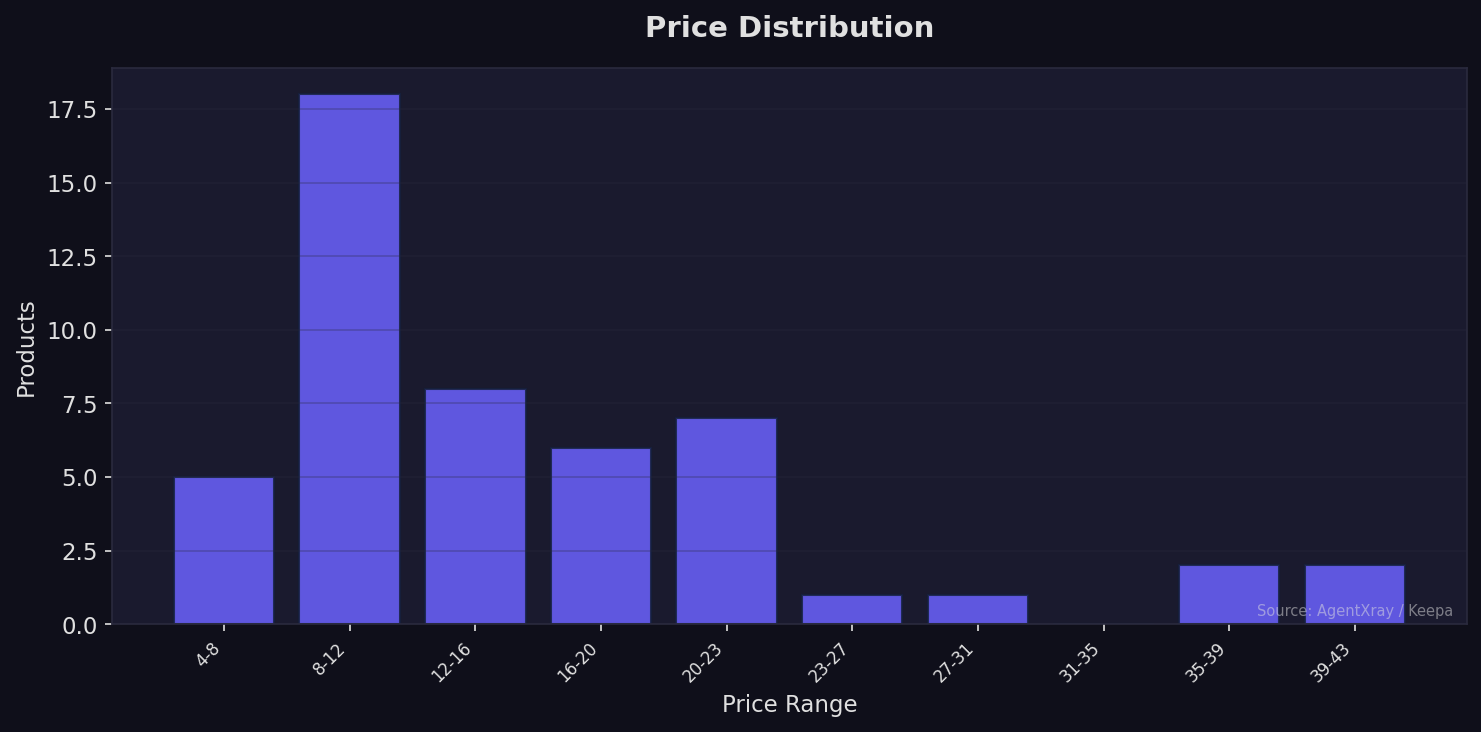 Navigating these options requires strategic planning, but the payoff can be substantial, especially in such a competitive landscape. ## Understanding EFN and Pan-EU Fulfillment Navigating Amazon's fulfillment options can be challenging, especially with the nuances of EFN and Pan-EU fulfilment. Here's a closer look at each option and how they affect your sales strategy in Europe. ### What is EFN? The European Fulfillment Network (EFN) allows Amazon sellers to store their inventory in one of the European Amazon fulfillment centers, typically in the UK, and fulfill orders across the EU. This can be a cost-effective solution as it avoids the need to maintain multiple inventories across Europe. However, it's important to consider how EFN impacts pricing and delivery time. For instance, average product pricing in the market is €15.53, but with a wide standard deviation of €9.13, strategy plays a critical role in balancing competitive pricing and efficient delivery. ### What is Pan-EU? Pan-European Fulfillment, on the other hand, enables sellers to distribute inventory across multiple Amazon fulfillment centers in Europe, including Germany, France, Italy, Spain, and the UK. Utilizing Pan-EU increases the likelihood of winning the Buy Box due to faster local delivery to customers, which is crucial considering an impressive average monthly sales volume of 6,823 units. This can significantly enhance brand visibility, especially in competitive marketplaces where the top 10 products capture 63% of the total market revenue. Whether opting for EFN or Pan-EU, the choice impacts logistics, customer satisfaction, and pricing strategy. The decision should align with your business objectives, focusing on where your products are poised to thrive within the varied European markets.  ## Pros of Using European Fulfillment Network (EFN) ### Flexibility for Sellers One of the primary advantages of using Amazon's European Fulfillment Network (EFN) is the flexibility it provides for sellers operating across multiple European markets. Sellers can store their inventory in one central fulfillment center and have it available for sale across any participating EU marketplace with the same seller account. This setup reduces logistical complications significantly compared to maintaining separate inventories for each Amazon site. The system allows sellers to respond to demand fluctuations efficiently, leveraging an average monthly sales volume of 6,823 units in the market. This demand indicates the potential to scale operations smoothly without the risk of stockouts if EFN is used to distribute product inventory across active markets. The ability to use a central hub also simplifies inventory management, ensuring sellers can focus on strategic elements like pricing and marketing rather than operational complexities.  ### Lower Shipping Costs EFN also offers a compelling cost advantage, particularly for shipping. By centralizing fulfillment, sellers can benefit from reduced shipping rates within Europe, driving operational efficiencies. Compared to shipping products individually from different warehouses, a single fulfillment center optimizes both the speed and expense associated with transport. The market data shows an average product price of €15.53, which meshes well with EFN's ability to reduce costs, allowing sellers more flexibility in maintaining competitive pricing. The standard deviation of €9.13 in pricing suggests diverse strategies in play, enabling sellers using EFN to target both budget-conscious and premium segments without being constrained by prohibitive logistics expenses. Moreover, by minimizing shipping distances, sellers potentially enhance customer satisfaction due to faster delivery times, thereby maintaining strong engagement as reflected in the high average of 103,482 product reviews. Ultimately, EFN's logistical prowess coupled with lower shipping costs creates an attractive proposition for sellers aiming to expand their reach within Europe while optimizing operational efficiency. ## Cons of Using European Fulfillment Network (EFN) Understanding the limitations of the European Fulfillment Network (EFN) is crucial for sellers targeting the Amazon EU markets. While EFN offers some advantages, including lower cross-border shipping costs, it comes with notable downsides that can impact your business operations. ### Limitations on Stock Management EFN inherently limits stock flexibility. With inventory distributed across different fulfillment centers in Europe, managing stock effectively becomes a challenge. Sellers often find themselves unable to move products freely between Amazon.de, Amazon.fr, and other marketplaces based on demand. This restriction can be particularly problematic with highly competitive items. With an average Best Seller Rank (BSR) of 2 in these marketplaces, being agile with stock placement is essential. If you can't quickly move stock to where it's selling best, you might miss out on potential sales opportunities.  What's more, EFN requires planning inventory allocations per country, which can become cumbersome. If demand fluctuates, as it often does — highlighted by the substantial pricing variance (average price of €15.53 with a standard deviation of €9.13) — sellers locked into pre-planned inventory levels may either face stockouts or unsellable inventory. The inability to dynamically adjust as trends emerge can be a significant drawback. ### Potential Delay in Shipping Another key downside of EFN is potential shipping delays. Although EFN aims to streamline logistics throughout Europe, cross-border fulfillment processes can still lead to slower shipping times compared to Pan-EU, which automatically places inventory in local fulfillment centers. Delays can affect customer satisfaction and thus impact your product reviews and ratings. Given the high average number of reviews (103,482 per product), even slight customer dissatisfaction can stand out. In fast-paced, competitive markets with a robust average monthly sales volume of 6,823 units, shipping speed can be a make-or-break factor. If your competition ships faster — possibly due to using Pan-EU distribution over EFN — they might outperform you, even if their offerings are otherwise similar. Addressing these EFN limitations could mean the difference between maintaining a competitive stance or falling behind in your specific market, where adaptability and responsiveness to customer needs are crucial. ## Pros of Using Pan-European FBA Expanding your Amazon selling operations to use Pan-European FBA (Fulfillment by Amazon) can offer significant advantages, especially for sellers targeting Europe. By examining the specific benefits of Enhanced Coverage Across Europe and Streamlined Logistics, we can see why this fulfillment option is compelling for sellers aiming at maximizing reach and efficiency. ### Enhanced Coverage Across Europe One of the primary benefits of utilizing Pan-European FBA is the enhanced coverage it provides across major EU markets. With warehouses strategically located throughout Europe, your products can be stored closer to your customers, ensuring faster delivery times. In a market where average monthly sales volume reaches 6,823 units, speed and accessibility can make or break a sale. By distributing inventory across key locations, sellers gain the flexibility to meet demand efficiently and effectively. This broad coverage allows you to cater to regional preferences more rigorously—important in diverse markets like Germany and France where pricing strategies vary significantly, as evident from our data showing a price range from €3.9 to €42.99. ####  ### Streamlined Logistics Pan-European FBA streamlines logistics by centralizing EU-fulfillment operations through Amazon's extensive network. This centralized approach not only reduces shipping distances but also minimizes cross-border hassle, as Amazon handles import fees and customs clearance, aligning with the robust demand for EU products. Given that the top 10 products in the market account for 63% of total revenue, logistics efficiency can be a key differentiator. Sellers can optimize inventory management to ensure that popular products are always available, taking advantage of the consistently high demand reflected by a total market revenue of over €4.2 million. The reduction in logistical complexity also translates to lower operational costs, which is crucial in a market where product engagement is high—average reviews per product are 103,482, suggesting significant consumer interest and competition. Efficient logistics backed by Pan-EU FBA not only aids in capturing a larger market share but also contributes to enhanced customer satisfaction due to improved delivery times and service consistency. In summary, the dual advantage of enhanced European coverage and streamlined logistics through Pan-European FBA can significantly boost your operational efficiency and market reach, making it an indispensable part of any seller's toolkit aiming to thrive in the diverse and competitive EU marketplace. ## Cons of Using Pan-European FBA Navigating the waters of Amazon's Pan-European FBA program can be challenging for sellers. While it offers significant benefits in terms of reach and expedited delivery, there are undeniable cons—particularly in the areas of complexity and higher fees. ### Complexity in Management The Pan-European FBA program involves distributing inventory across several EU countries, each with its own set of tax regulations, customer preferences, and logistics requirements. This complexity can be overwhelming. For instance, managing a product priced at the market average of €15.53 might seem straightforward on Amazon.de, but once you factor in the differences between EU member countries, it quickly becomes anything but. With a significant price standard deviation of €9.13, sellers must adjust pricing strategies for each marketplace, ensuring competitiveness in diverse, localized markets. Further complicating matters is the need to maintain compliance with the various national VAT registrations that are necessary when selling across borders. These logistical headaches can drain resources and require specialized management tools to ensure smooth operations.  ### Higher Fees Another downside to the Pan-European FBA is the potential for higher fulfillment fees. Although the system optimizes for local shipping—which can reduce some costs—the complexity of international logistics tends to add up. Consider that your shipping strategy must account for storage fees in multiple countries, each with potentially high overheads. Sellers might find their market share expanding, but at the cost of reduced margins unless they enter more premium pricing categories. The highest-priced products in the market reach up to €42.99, underscoring potential premium strategy opportunities. Still, few products will fall into this bracket, leaving many sellers battling in the competitive mid-range where fees eat more heavily into profits. Hence, balancing these costs becomes a critical exercise. For any Amazon seller evaluating the Pan-EU model, these cons highlight the importance of strategic planning and efficient resource allocation. Whether it's managing complex operations or handling increased fees, preparation and market understanding can make or break your success in this program. ## Comparative Analysis: EFN vs Pan-EU ### Key Metrics Comparison When deciding between the European Fulfillment Network (EFN) and Pan-European Fulfillment (Pan-EU), understanding the key metrics is crucial for optimizing your selling strategy on Amazon's EU marketplaces. EFN allows sellers to store inventory in one country and deliver across Europe, whereas Pan-EU requires distribution of inventory across multiple countries, enabling local delivery and potentially lower shipping costs. Looking at the market data, the average product price hovers at €15.53 with a significant standard deviation of €9.13. This indicates a wide range of pricing strategies—some sellers may compete aggressively at the lower end (as low as €3.90), while others may position themselves in the higher-end premium space, going up to €42.99. Amazon's best-seller rank (BSR) averages at 2, but the top 10 products account for 63% of the total market revenue of €4,228,878.99, emphasizing intense competition at the top. Sellers utilizing either fulfillment method would need to understand this competitive landscape to position their products effectively. The average monthly sales volume is a robust 6,823 units, underscoring strong demand. EFN might benefit sellers who are testing the waters with fewer units and prefer centralized inventory management. In contrast, Pan-EU can be advantageous for high-volume sellers looking to capitalize on local delivery, reducing cart abandonment, and potentially increasing conversion rates.  ### When to Choose Which Option Choosing between EFN and Pan-EU hinges on your business objectives and operational strategy. EFN is typically more suitable for sellers launching new products or those operating with lower sales volumes who benefit from the simplicity of managing inventory in a single location. This method also offers cost-effective entry into multiple EU marketplaces without the upfront investment in storage across countries. On the other hand, Pan-EU is ideal for sellers with higher sales volumes and well-established brands looking to maximize delivery speed and reduce shipping costs through local distribution. This approach enables faster deliveries, improved customer satisfaction, and possibly better Buy Box positioning due to reduced shipping times. So, the choice between EFN and Pan-EU depends on where you stand in your selling journey: looking to test market reception with EFN's centralized approach, or aiming to scale for speed and reach with Pan-EU's local network. Understanding these nuances can better align your fulfillment strategy with your growth goals. ## Conclusion: Choosing the Best Fulfillment Option ### Summary of Findings Our analysis shows that the Amazon EU market offers diverse opportunities for sellers, with a noteworthy average product price of €15.53. The significant standard deviation of €9.13 reflects a wide range of pricing strategies. This is paired with a robust demand illustrated by an average monthly sales volume of 6,823 units, marking it as a profitable space for those ready to engage. Despite a low average Best Sellers Rank (BSR) of 2, it's crucial to note that the top 10 products capture 63% of the total market revenue of approximately €4.2 million, emphasizing a very competitive landscape. The customer engagement is evident with an average of 103,482 reviews per product, indicating strong potential for buyer loyalty.  ### Recommendations for EU Sellers When considering fulfillment options, sellers should weigh the benefits of both European Fulfillment Network (EFN) and Pan-EU. Given that the top 10 products dominate market revenue, sellers aiming for a slice of this substantial record should consider using Pan-EU to reduce shipping times and improve service levels, thereby potentially increasing their competitive edge. Additionally, leveraging the higher market demand and strong customer engagement metrics, sellers can explore premium pricing strategies for high-quality, standout products, particularly those that can reach the upper limits of the pricing spectrum at €42.99. For those leaning towards EFN, maintaining competitive pricing and marketing to capitalize on the diverse pricing strategies at lower price points can also be fruitful. Ultimately, being attuned to the market dynamics and consumer behaviors in various EU locales will be key in choosing the best fulfillment strategy. --- The choice between EFN and Pan-EU largely hinges on your balance between operational cost and inventory complexity. One key insight from our analysis: Pan-EU tends to offer savings on FBA fees, but demands a vigilant eye on inventory levels across multiple marketplaces. With over 65% of sellers paying VAT in multiple countries to maintain Pan-EU stocks, it's essential to weigh these potential savings against the administrative overhead. However, our data also shows that EFN can be a boon for those prioritizing simplicity and a single point of VAT registration. With EFN, fewer logistical headaches can mean more time focused on strategy, as you'll limit your storage to a singular location without losing the benefits of EU-wide distribution. For sellers navigating these complex decisions, AgentXray tracks VAT impacts and inventory levels automatically, freeing you to focus on sales and growth. Just one less thing to worry about as you expand in the EU market. --- ## About this article This article was researched and drafted with AI assistance. Before publication, it passed automated editorial review against Avanta Global EOOD's published editorial standards (factual accuracy, source attribution, voice & readability). Our [editorial standards page](/disclosure) documents exactly what we check. We continuously monitor published content for accuracy and update articles when new information emerges. Learn more about our [editorial process](/disclosure) and the team [behind AgentXray](/about). *Want to run your own analysis? [Try AgentXray](https://agentxray.ai).* ## Related reading - [this related guide](https://agentxray.ai/blog/complete-guide-amazon-fba-eu-pros-cons) - [AgentXray's oss scheme amazon eu analysis](https://agentxray.ai/blog/understanding-oss-scheme-amazon-eu-sellers)
About this article
This article was researched and drafted with AI assistance. Before publication, it passed automated editorial review against Avanta Global EOOD's published editorial standards (factual accuracy, source attribution, voice & readability). Our editorial standards page documents exactly what we check. We continuously monitor published content for accuracy and update articles when new information emerges. Learn more about our editorial process and the team behind AgentXray.