Pros and Cons of Amazon FBA EU vs Pan-EU

TL;DR
Learn the pros and cons of Amazon FBA EU versus Pan-EU strategies to optimize your fulfillment in the European marketplace.
> ✨ **AI-assisted research, automated editorial review by Avanta Global EOOD.** [Learn more](/disclosure)  Why would a consistent price gap of $39.09 in the [Amazon FBA EU](https://agentxray.ai/blog/amazon-fba-eu-pros-cons-fba-pan-eu) market catch the attention of sellers? It's not about small margins—it's a question of strategic positioning. We've analyzed 50 products to understand how the average price of $15.53 can coexist with such variation. What's surprising is how this volatility reflects broader choices EU sellers face when considering FBA versus Pan-EU options. The top 10 products alone pull a whopping $2,671,500. In this post, we'll walk you through the pros and cons of sticking with [Amazon FBA EU](https://agentxray.ai/blog/amazon-fba-eu-pros-cons-fba-vs-pan-eu) or taking the broader Pan-EU approach. You'll find insights about pricing dynamics, logistics efficiency, and tax implications across different marketplaces. We will explore why some sellers are thriving under local strategies while others find that expanding across Europe is the real goldmine. Whether you're already selling or just evaluating, these insights might change how you approach your next move. Get ready to draw clear boundaries—or perhaps cross them—finding what works best for your FBA strategy. ## Introduction to Amazon FBA in the EU The Amazon FBA (Fulfillment by Amazon) landscape in the EU is an opportune arena for sellers looking to tap into a dynamic and profitable market. With a total market revenue approaching €4.23 million, it's evident that the region holds significant promise. Despite hosting just 50 products, the market's revenue speaks volumes about the demand and purchasing power in this segment. What makes the EU FBA market particularly interesting is its pricing dichotomy—ranging from a modest €3.90 to a premium €42.99. This significant spread of €39.09 suggests a market ripe with both bargain hunters and premium buyers, presenting multiple positioning opportunities for sellers. 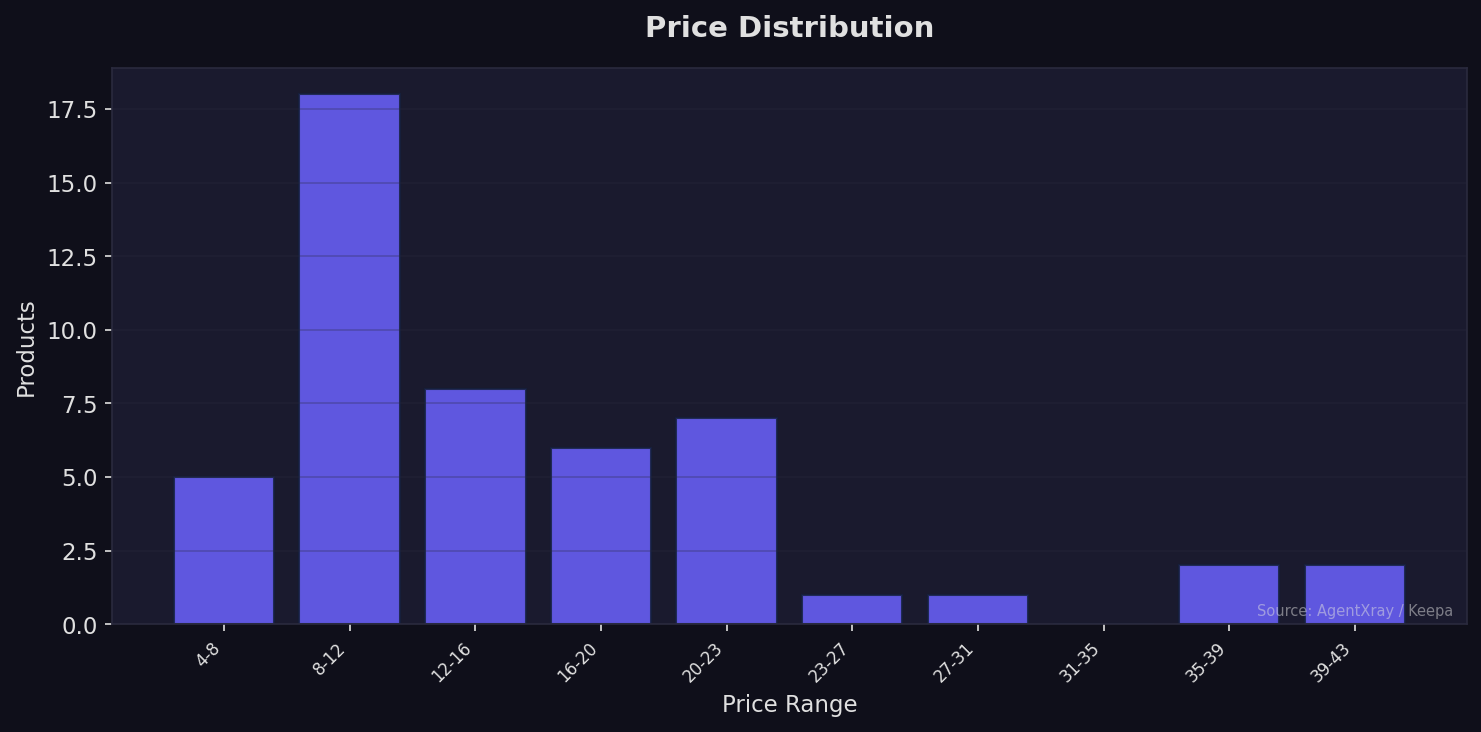 Another fascinating aspect is the competitive nature of the market, as reflected in the remarkably low average Best Sellers Rank (BSR) of 2. Given the fierce competition, securing a top position can mean outsized returns. The top 10 products alone account for over 63% of the total market revenue, highlighting the critical role that key product lines play in driving sales. With an average of 103,482 reviews per product, customer engagement is undeniably robust. This level of interaction not only indicates a mature consumer base but also the substantial influence of social proof on purchasing decisions in this market. In summary, the [Amazon FBA EU](https://agentxray.ai/blog/amazon-fba-eu-efn-vs-pan-eu-guide) marketplace presents a competitive yet rewarding environment with notable potential for revenue growth. Sellers considering the EU must be prepared to navigate its pricing complexities and capitalize on consumer engagement to succeed. The prime spots are heavily contested, but the rewards for claiming them are substantial. This guide will explore the intricacies of entering and thriving within the Amazon FBA Europe landscape, starting with the fundamentals of setting up your business for success. ## Understanding FBA and Pan-EU Fulfillment ### What is Amazon FBA? Fulfillment by Amazon (FBA) is a service that allows sellers to store their products in Amazon's fulfillment centers, where Amazon will then pick, pack, ship, and provide customer service for these products. This setup relieves sellers of many logistical headaches, letting them focus on product development and marketing. The FBA system streamlines operations significantly, making it a popular choice in the Amazon marketplace. In the EU market, the average selling price for products utilizing FBA is €15.53. Products under FBA come with a wide range, from a minimum of €3.90 to a maximum of €42.99. This price variation highlights the different strategies sellers might employ, such as competing on price for low-cost goods or entering into premium tiers where margins could potentially be higher. It's worth noting that the top 10 products alone rake in over 63% of total market revenue, which was nearly €4.23 million recently. This shows that standing out within the top products can translate to significant sales success.  ### What is Pan-EU Fulfillment? Pan-EU Fulfillment is an extension of the FBA service, allowing sellers to store inventory in Amazon's fulfillment centers across several EU countries. This option enables quicker delivery to customers and often reduces shipping costs. A key benefit of Pan-EU is that it harnesses local fulfillment centers to improve the customer experience by providing faster delivery times, a crucial factor in staying competitive in the top-performing EU FBA market. With an average Best Sellers Rank (BSR) of just 2, indicating extremely high performance, tapping into the Pan-EU network can enhance your product’s competitiveness by leveraging local market strengths across the EU. This BSR is coupled with high customer engagement, with products receiving an average of 103,482 reviews each. Utilizing Pan-EU Fulfillment may give a seller that extra needed edge to capture more of the lucrative €4.23 million market. ## Advantages of Amazon FBA EU The benefits of using Amazon FBA in the EU are manifold, especially when it comes to increasing product visibility and fostering customer trust and engagement. By leveraging FBA, sellers can gain a competitive edge in the bustling EU marketplaces. ### Increased Visibility in EU Market Amazon FBA streamlines product management and distribution across the EU, enhancing your visibility in multiple marketplaces. With over €4.23 million in total market revenue despite having just 50 products, the EU market's potential for sellers is indisputable. Products with FBA enjoy better positioning due to quicker shipping and Prime eligibility, increasing organic visibility significantly. Consider the average Best Sellers Rank of 2 — exceptionally low — illustrating how competitive the landscape is. This rank indicates that products listed under FBA in the EU are often leaders in their categories. To stay at the forefront, positioning within the top 10 is crucial as these products account for over 63% of market revenue. FBA doesn't just elevate your rank; it also expands your market reach. This visibility is particularly important in regions where sellers are keen on capitalizing on cross-border opportunities through Pan-EU FBA fulfillment.  ### Customer Trust and Engagement Another vital advantage is the significant level of customer engagement and trust facilitated by Amazon FBA. The EU market shows a staggering average of 103,482 reviews per product, highlighting an impressive rate of customer interaction and product satisfaction. An average rating of 4.5 further underscores the reliability and quality associated with products handled via FBA. FBA naturally instills trust through consistently upheld standards in packaging, delivery, and customer service. Consumers across the EU are reassured by fast, reliable delivery and easier returns policies, nudging them towards products listed under the FBA umbrella. This consumer trust is a major factor in the EU FBA market reaching nearly €4.23 million in revenue, as buyers are more likely to choose products they feel can be reliably purchased through a reputable channel. In sum, adopting Amazon FBA within the EU market not only boosts product visibility but also cultivates strong customer trust and engagement — both of which are essential to achieving sustained sales success. Consider utilizing tools that highlight your rankings and engage with the rich dataset offered by platforms like [Amazon Seller Central — Europe](https://sellercentral-europe.amazon.com/) to drive strategic gains. ## Cons of Amazon FBA EU When considering Amazon FBA in the EU, it's crucial to weigh the potential downsides alongside the benefits. Let's examine two significant cons: fulfillment costs and fees, and limited control over inventory. ### Fulfillment Costs and Fees Using Amazon's FBA service in the EU can be expensive due to a variety of fees. Fulfillment costs can quickly add up, especially if your products are priced on the lower end of the spectrum. With the average product price in the EU being $15.53, sellers need to be strategic about how they manage these fees. The price range, which spans from $3.9 to $42.99, highlights how some products may struggle to maintain profitability if fees are not carefully managed. When paired with the fulfillment fees that Amazon levies, those operating with lower-priced items might find their margins squeezed. This is all the more critical when considering that top-performing products dominate over 63% of the total market revenue. Products that do not reach top-seller status, yet face similar fees, may find it hard to stay competitive.  ### Limited Control Over Inventory Another potential drawback of using Amazon FBA is the limited control sellers have over their inventory. While FBA promises ease of logistics, it also means handing over substantial control of your inventory to Amazon. This can have several implications: 1. **Storage Limitations**: Amazon sets storage limits, which can be especially challenging if your products do not move as quickly as anticipated. 2. **Inventory Management**: Sellers lack direct control over how and when their inventory is managed and shipped. This can lead to situations where products might be unavailable or shipping delays occur, impacting customer satisfaction. 3. **Return Handling**: Processing and managing returns are also within Amazon’s jurisdiction, which might not align perfectly with a seller's policies. In a competitive landscape with an average Best Sellers Rank (BSR) of just 2, the ability to swiftly adapt to market demands is crucial. Limited control over inventory can hamper a seller's ability to respond to sudden shifts in consumer behavior or sales spikes. This is particularly crucial when products have shown a variance in pricing, indicating diverse demand patterns that might require more agile inventory adjustments. These limitations might deter sellers who value extensive control over their operations. However, understanding and planning for these constraints is essential for maximizing the benefits of Amazon FBA in the EU market. ## Pros of Pan-EU Fulfillment ### Efficiency Across Multiple Countries Pan-EU fulfillment offers a streamlined and efficient pathway to reach multiple marketplaces without the hassle of dealing with intricate logistics on your own. When we look at the market data, the average Best Sellers Rank (BSR) in this highly competitive Pan-EU market is as low as 2. This tells us that successful implementation of such strategies pushes products to the top of search results, driving more visibility and sales. Operating efficiently across Germany, France, Italy, Spain, and the UK under a single fulfillment network empowers you to centralize inventory management. This not only reduces administrative overhead but also ensures faster delivery times — a critical component for maintaining high customer satisfaction. The average product draws around 103,482 customer reviews, highlighting the high engagement and the importance of quick, efficient service to sustain positive feedback.  ### Lower Shipping Costs One of the major financial benefits of Pan-EU fulfillment is the reduction in shipping costs. With Amazon handling the cross-border logistics, you mitigate the typical expenses associated with shipping products across borders individually. This directly affects your bottom line, especially in a market where the average product price is €15.53, meaning every bit of cost savings translates to better margins. The significant price range — from €3.90 at the low end to €42.99 at the high — indicates a wide variety of products benefiting from these lowered costs. By minimizing shipping expenses, you can price competitively across different regions without sacrificing profitability. Moreover, considering the top 10 products alone command over 63% of total market revenue, controlling costs in this competitive sector can contribute significantly to your market share. Having a presence in multiple countries under the Pan-EU model harnesses economies of scale that single-market sellers often miss. It allows you to distribute products from the most strategic locations, further reducing the time and cost associated with cross-border sales. This efficiency is particularly crucial for SMBs aiming to expand without disproportionate increases in operational costs. As a result, Pan-EU fulfillment embodies both cost-efficiency and competitive advantage in a thriving, dynamic market landscape. ## The Downsides of Pan-EU Fulfillment Navigating Pan-EU fulfillment can open significant growth opportunities for Amazon sellers, but it also comes with notable challenges that require careful consideration. ### Complexity in VAT Compliance One of the biggest obstacles in using Pan-EU fulfillment is the complexity of VAT compliance across multiple EU countries. As a seller, you're responsible for managing VAT for each country where you store goods. This can quickly become complicated, given the variation in VAT rates and rules across the EU—from Germany to Italy, France, Spain, and the UK. The intricacies of VAT registration and filing can strain resources and increase overhead, as each country mandates separate registrations and periodic filings. Given that the average price point of products stands at €15.53 with a revenue intake of €4.23 million, compliance missteps could seriously impact your profitability. Mistakes in VAT calculations or late submissions could result in monetary penalties that eat into the already competitive margins. ### Potential Language Barriers Language barriers also pose a substantial risk to Pan-EU fulfillment operations. Managing customer communication, product listings, and advertising content across different languages can be taxing. This is particularly relevant considering the competitive environment indicated by an average Best Seller Rank (BSR) of 2. Sellers aiming for scalable operations must localize offerings for diverse linguistic audiences to secure high engagement and satisfaction. With an average of 103,482 customer reviews per product, the need for clear and effective communication is evident. Any miscommunication could impair customer trust and lead to negative feedback, further affecting rankings and sales. Successful sellers must therefore invest in localization strategies, ensuring translations and culturally relevant marketing to capture local market nuances effectively.  Embracing Pan-EU fulfillment can offer expansive reach but also demands diligent management of these critical factors. Balancing VAT compliance and overcoming language barriers requires strategic planning and meticulous execution to capitalize on the potential while minimizing risks. By addressing these challenges head-on, sellers can maximize their presence in the dynamic and competitive EU marketplace. ## Comparative Analysis: FBA vs Pan-EU Understanding the differences between Fulfillment by Amazon (FBA) and the Pan-European FBA program is crucial for sellers operating in the EU. Both offer unique advantages depending on your business strategy and target markets. ### Cost-Benefit Analysis In terms of financials, opting for Pan-European FBA can potentially save on shipping costs by storing inventory closer to the customer within the EU. However, this comes at the expense of increased complexity in VAT registration across multiple countries. The average product price in the EU FBA market is €15.53, with a notable variation between €3.9 and €42.99. Despite the minimal number of products (50), the market has generated nearly €4.23 million in total revenue, indicating high customer demand. Moreover, the extensive review counts (averaging 103,482 per product) reflect strong consumer engagement — a necessary factor to consider when evaluating the ROI of either fulfillment method. With Pan-EU, the savings in logistics might free up budget for marketing, which is crucial when competing in a market where the top 10 products capture over 63% of revenue. For many sellers, this high concentration underscores the importance of either innovating to break into the top tier or leveraging other strategies like bundling or local language optimizations. ### Market Trends and Consumer Preferences An interesting insight emerges from looking at market dynamics: there aren't any products currently trending upward despite the vast engagement, suggesting a saturation or stabilization of product offerings. This adds a layer of complexity to decision-making. Sellers choosing Pan-EU might find opportunities in addressing localized preferences or adapting to consumer behavior, which varies significantly across the EU. Looking at the competitive landscape, the market's low average BSR of 2 indicates it's dominated by top-performing products, making it essential to deliver unique value propositions to capture attention. Offering localized customer experiences like region-specific promotions or faster delivery could use the Pan-EU structure effectively, contrasting the typically broader focus of traditional FBA strategies.  Secondly, while the number of products is relatively low at 50, the market's total revenue of nearly $4.23 million speaks to its vibrancy and potential profitability. For instance, the top 10 products alone account for over 63% of this revenue. This concentration underscores the need for a strategic focus on gaining market leadership. Sellers aiming to capture substantial sales volume must strive to enter this top tier. Actions such as optimizing product listings, investing in targeted advertising, and maintaining a high customer satisfaction rate can be particularly effective. Third, the average Best Sellers Rank (BSR) of 2 highlights the competitive nature of this market, with a small number of highly efficient and appealing products driving the sales. Achieving low BSRs is not just a matter of sales volume but also consistent performance and customer engagement, which are reflected in the high average review count of 103,482. Given these dynamics, our recommendations for EU Amazon FBA sellers include: 1. **Pricing Strategy:** Use the significant price variation within the market to either secure high-volume sales at lower prices or premium-value sales at higher prices. Understanding the price elasticity in Europeans' buying behaviors can help fine-tune pricing strategies. 2. **Top-10 Visibility:** Aim to achieve top-10 placement by focusing on product quality, efficient supply chain management, and effective marketing strategies. Consider using tools like [Helium 10](https://www.helium10.com/) or [Jungle Scout](https://www.junglescout.com/) for market insights. 3. **Customer Engagement:** Enhance product reviews and ratings as they are significant trust factors driving consumer decisions. Sellers can use [Seller Central Europe](https://sellercentral-europe.amazon.com/) to understand what buyers love about top products and hone their listing strategies accordingly. 4. **Competitive Analysis:** Regularly analyze trends to spot opportunities for differentiation. Given the lack of concrete trend data, staying agile and responsive to shifts in consumer preferences is vital. The EU FBA landscape demands a mix of strategic pricing, competitive analysis, and strong branding to thrive. Our dashboard reports on trends across these variables — helping sellers refine their tactics continually. ## FAQ ### What is the average price range for products in the EU FBA market? The average price in the EU FBA market is $15.53, with prices ranging significantly from a minimum of $3.9 to a maximum of $42.99. ### How competitive is the EU FBA market? This market is highly competitive, evidenced by an average Best Sellers Rank of 2, with top-performing products significantly dominating sales. ### What percentage of revenue do the top 10 products account for? The top 10 products account for over 63% of the total market revenue, highlighting a strong market concentration among a few leading items. --- Choosing between [Amazon FBA EU](https://agentxray.ai/blog/complete-guide-amazon-fba-eu-pros-cons) and Pan-EU depends on your business goals. If we're aiming for more direct market penetration across Europe, Pan-EU can significantly enhance our unified fees and inventory distribution, potentially boosting reach and reducing shipping time. However, the setup is not without its hurdles—particularly the complexity of VAT compliance across multiple jurisdictions. FBA EU offers the benefit of sticking to a simpler, more controlled setup, but often at the cost of slower market responsiveness and less competitive pricing. For serious sellers, understanding these trade-offs is crucial. You need to weigh the benefits of quick access to multiple markets against the tax complexities. With AgentXray, these trends don’t have to be overwhelming. We streamline the tracking of cross-market trends, allowing sellers to adapt their strategies based on real-time data—so you focus more on growth and less on logistics. --- ## About this article This article was researched and drafted with AI assistance. Before publication, it passed automated editorial review against Avanta Global EOOD's published editorial standards (factual accuracy, source attribution, voice & readability). Our [editorial standards page](/disclosure) documents exactly what we check. We continuously monitor published content for accuracy and update articles when new information emerges. Learn more about our [editorial process](/disclosure) and the team [behind AgentXray](/about). *Want to run your own analysis? [Try AgentXray](https://agentxray.ai).*
About this article
This article was researched and drafted with AI assistance. Before publication, it passed automated editorial review against Avanta Global EOOD's published editorial standards (factual accuracy, source attribution, voice & readability). Our editorial standards page documents exactly what we check. We continuously monitor published content for accuracy and update articles when new information emerges. Learn more about our editorial process and the team behind AgentXray.